When you speak
Jev reads it first
Is this a new task, a follow-up, or a correction? Should a message that arrives mid-run interrupt now? Do skills and tools need to come in, or can one sentence answer it?
◆ jev-1.13-free multi-step task · heavy gear · 752 ms
This is a real turn. "Run the tests and fix the failing ones" comes in, and in under a second Jev answers: a multi-step task, heavy gear. Skills and MCP servers the task does not need stay out of the context until it does.
When a tool answers
Output goes past Jev first
A test run or a search easily returns hundreds of lines. Jev judges chunk by chunk what matters now: the failing cases stay, logs that repeat themselves go. What stays out is archived behind a pointer, ready when it is needed.
In web pages and MCP results, instructions aimed at the model are withheld before it reads them.
Before acting
Stop what should stop, ask only what needs asking
Before each command runs, Jev judges whether it does something that cannot be undone, and whether it crosses a rule you set. There are three permission modes: Full access, Jev approves and Minimal permissions, switchable at any time. Under Jev approves, you are asked only what needs you; the rest runs.
A verdict changes what the model does next, never whether it asks you.
When the turn ends
Done means verified
When the model says it is done, mu checks whether anything verified that, whether the turn drifted, and whether to go back to a checkpoint.
/goal <condition> keeps the agent working until the condition holds. A big model checks whether it does, with Jev as the fallback; when the same error comes back again and again, Jev judges whether the approach is a dead end.
The hive
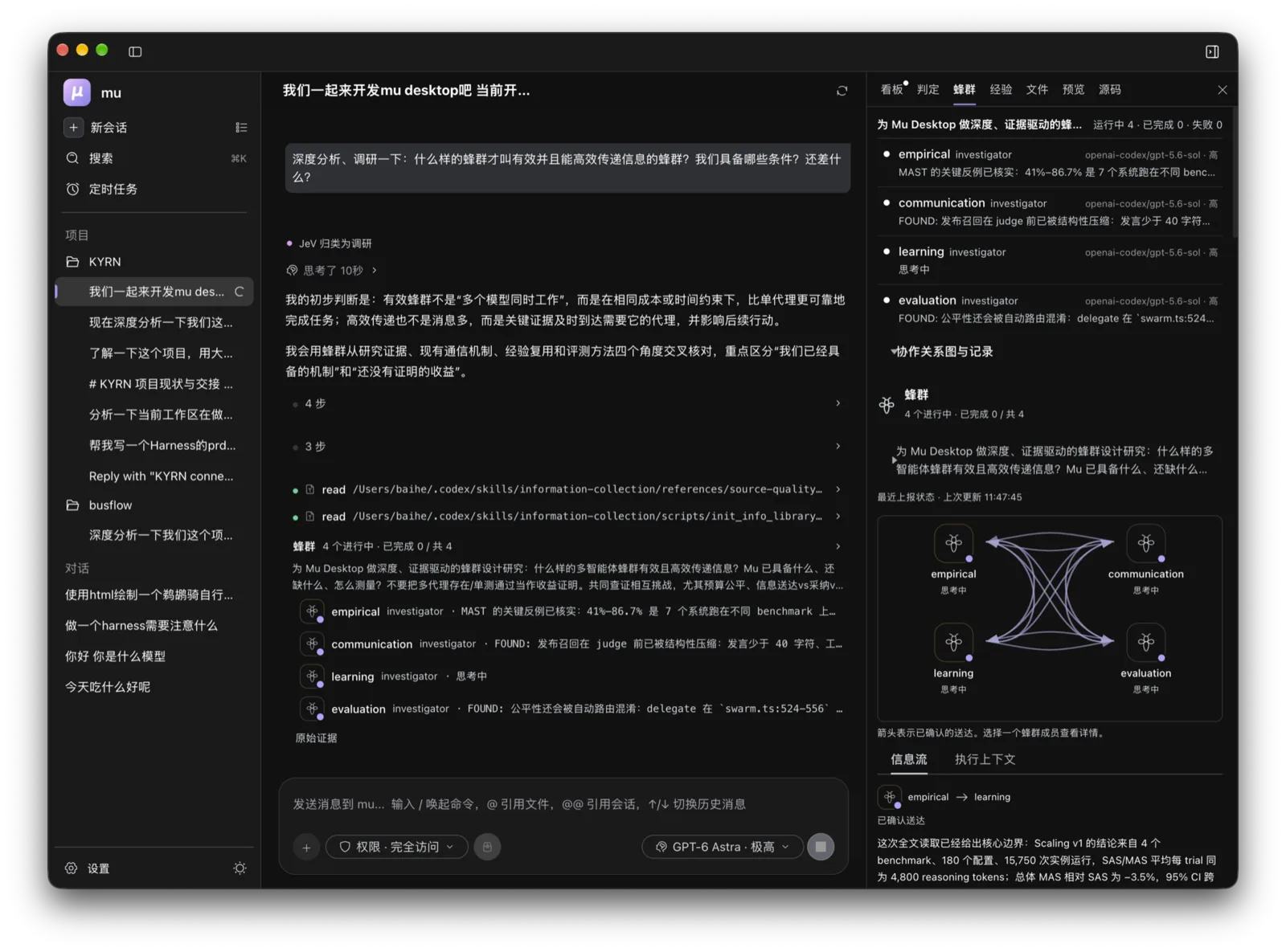
Several bees at work, Jev in the middle
When several agents work on one hard problem, handing out the work is easy; talking is hard. Say nothing, and each walks into the same dead end. Say everything, and every context fills with the others' chatter.
In mu's hive, Jev judges every finding: is it worth sharing, and does it matter to this bee? Only then does it reach another bee as context. When a later finding overturns an earlier one, the correction goes to every bee that heard it.
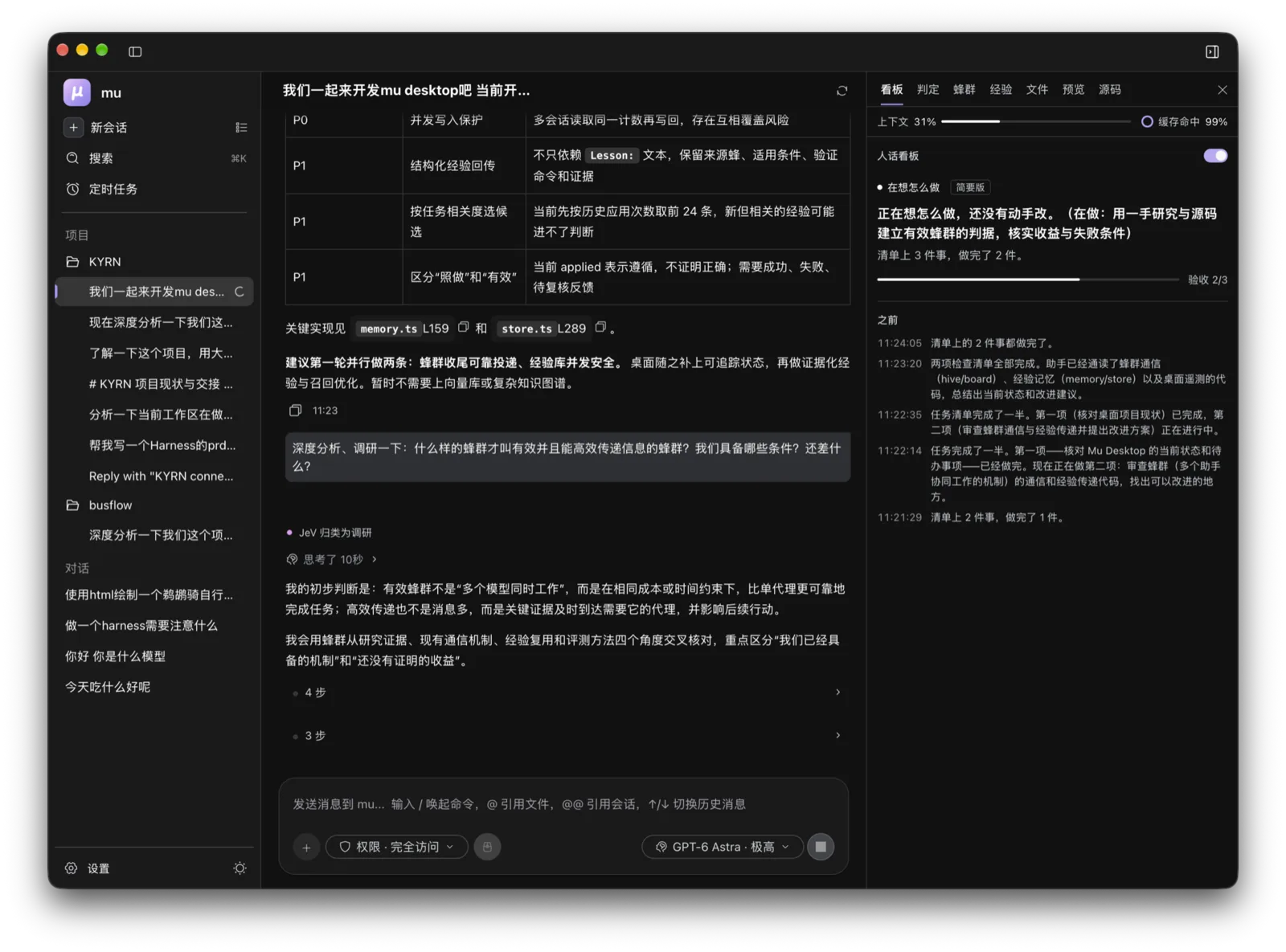
The plain-language board
Working and reporting are different jobs
Models get stronger, and their reports read more and more like notes for a machine. In mu the working model keeps working its own way. Every few tool calls Jev reads the scene, picks what is really news, and hands it to a model chosen for speaking plainly, which tells you where things stand.
When a run ends, you see not just "done" but what was actually done.
 mu
mu